Cosmetics Brand Shop

If you're seeing this, you shouldn't.
Note: This is a case study of work led by Sam Rojas at a consulting firm. It does not depict work produced independently by roji design. The images used here are scrubbed re-creations of designs for concept discussion and do not represent the entire completed project.
Designing e-commerce to feel like a natural extension of social media.
/ Overview
A cosmetics brand sought to explore a direct-to-consumer e-commerce experience that reflected social media–driven behaviors.
Over six weeks, we designed a concept that balanced brand storytelling with a modern shopping experience.
/ Market Analysis
We analyzed cosmetics industry patterns and studied how leading brands drive shopping on TikTok and Instagram.
To align e-commerce goals with social media strategy, we observed user behaviors on the client's digital content and highlighted opportunities to connect product pages with social storytelling.
Makeup tutorial videos inspired a design approach that merged product discovery with social engagement, creating a shopping experience that felt native to digital consumers.
/ PRODUCT FLOW
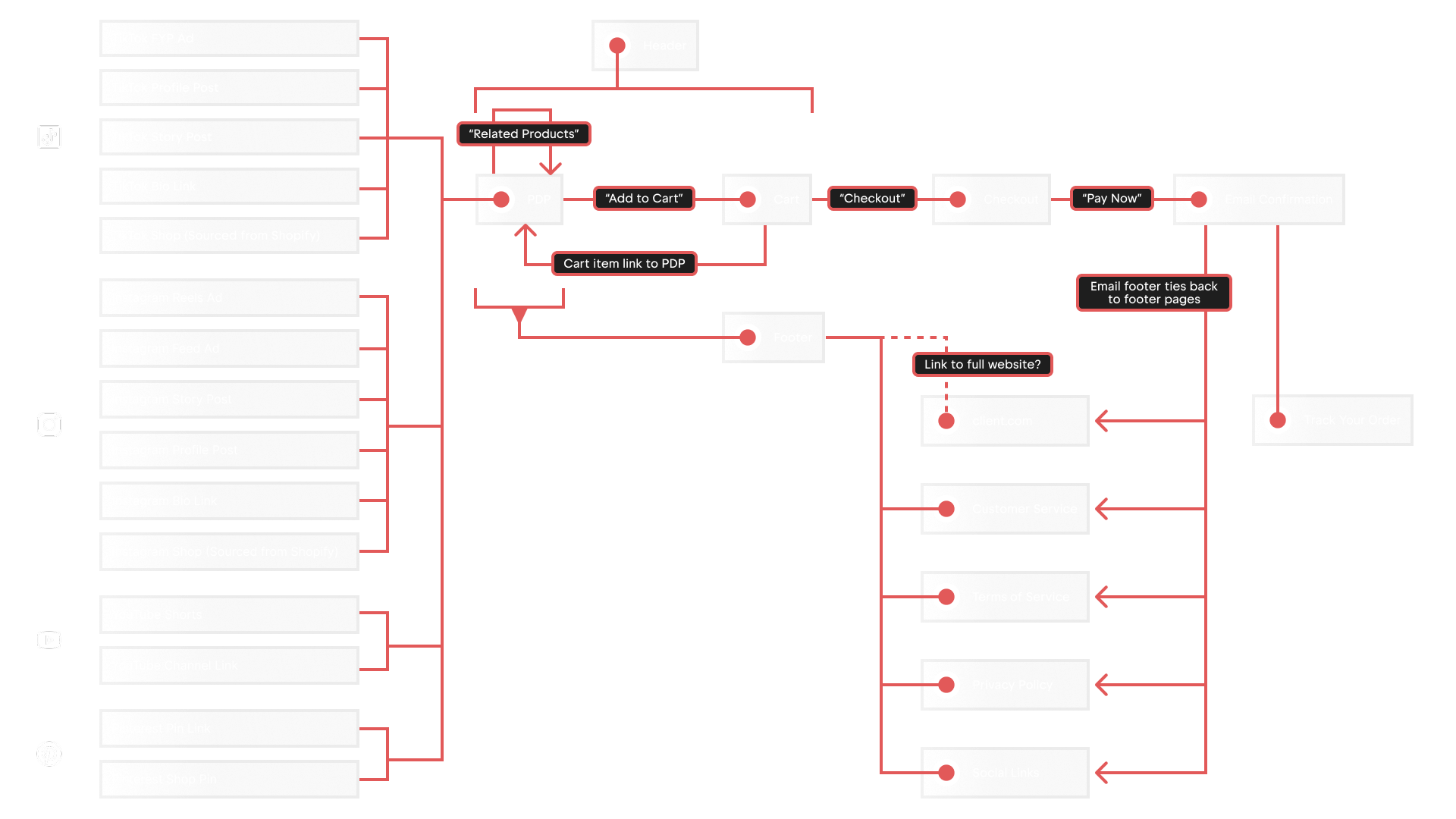
The product flow was built around social-first discovery and fast conversion.
Entry points from social platforms were mapped to visualize their path into the DTC experience.
We focused on minimizing steps from discovery to checkouts, while secondary touchpoints like customer service, legal content, and order tracking remained accessible without interrupting the primary flow.
/ Concept
Rethinking the product page with a video-first layout borrowed interaction patterns from social media to immediately engage users.
Above the fold, the experience prioritized video-led discovery, inviting users to tap through brand content and UGC like story posts.
A swipe up brought users below the fold, where multiple layout iterations explored how product information, reviews, and cross-sell opportunities could be presented.


/ Design Process
Design exploration moved quickly from concept into high-fidelity execution with brand guidelines informing type and color styles across product detail, cart, checkout, and legal information pages.
A fully linked, clickable prototype showcasing three products with video and dynamic content brought the concept to life for the client.
Design reviews with Shopify development SMEs ensured feasibility, with adjustments made to align the experience with platform constraints.
/ Outcome
The project played a key role in shaping the client’s approach to direct-to-consumer sales.
Previously reliant on retail distribution, the design explorations and strategy conversations helped establish a path toward selling directly through social platforms.
The concept supported a broader shift to TikTok as a primary point of sale, while also influencing how video content could live on product pages to create a content-led shopping experience.